I'm an economist interested in the design of digital platforms and AI systems.
My research combines recent econometric and machine learning methods for causal inference with AI tools, economic theory, and structural econometrics.
My PhD thesis at the Paris School of Economics and Université Paris 1 Panthéon-Sorbonne explored whether large-scale sharing is possible without market incentives (it is!).
I was fortunate to be advised by Olivier Tercieux and Liam Wren-Lewis.
In Spring 2024, I visited Yeon-Koo Che in the Department of Economics at Columbia University.
I also hold a Master's degree in Economics from the Paris School of Economics and EHESS, and a B.A. in Philosophy & Economics from the University of Bayreuth.
I am currently working at the European Centre for Algorithmic Transparency.
Working papers
Pricing in markets without money: Theory and evidence from home exchanges
Abstract:
A growing number of markets use token money instead of real money to allocate resources, such as class seats, food donations or holiday homes. Agents earn token money by supplying and can only spend tokens by consuming within the system. A
platform decides how to set goods’ token prices. Should it i) clear the market, as assumed in canonical competitive equilibrium frameworks, or ii) compress prices and
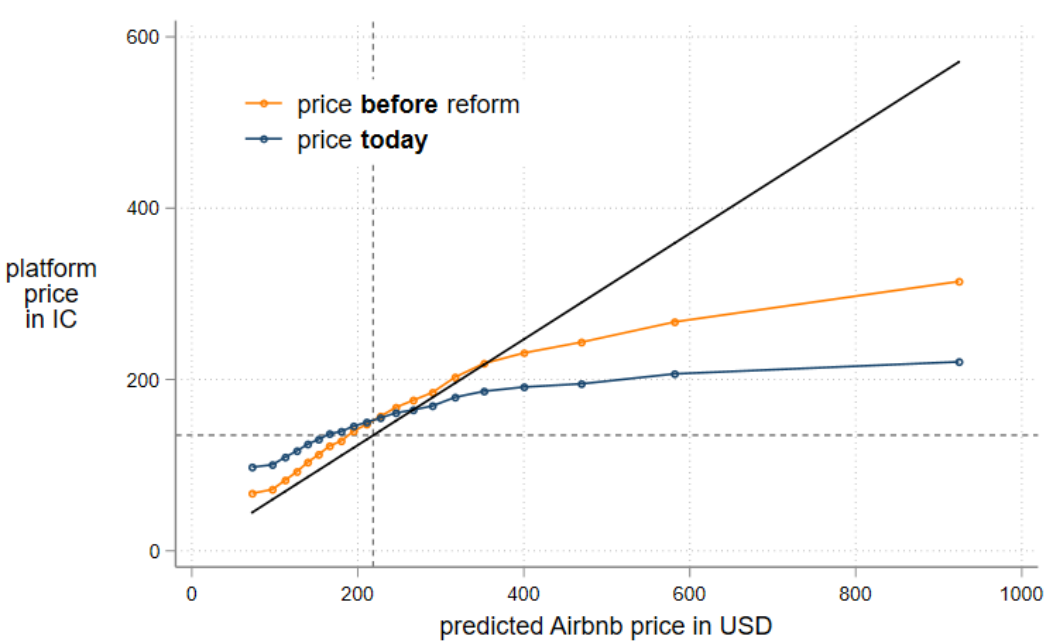
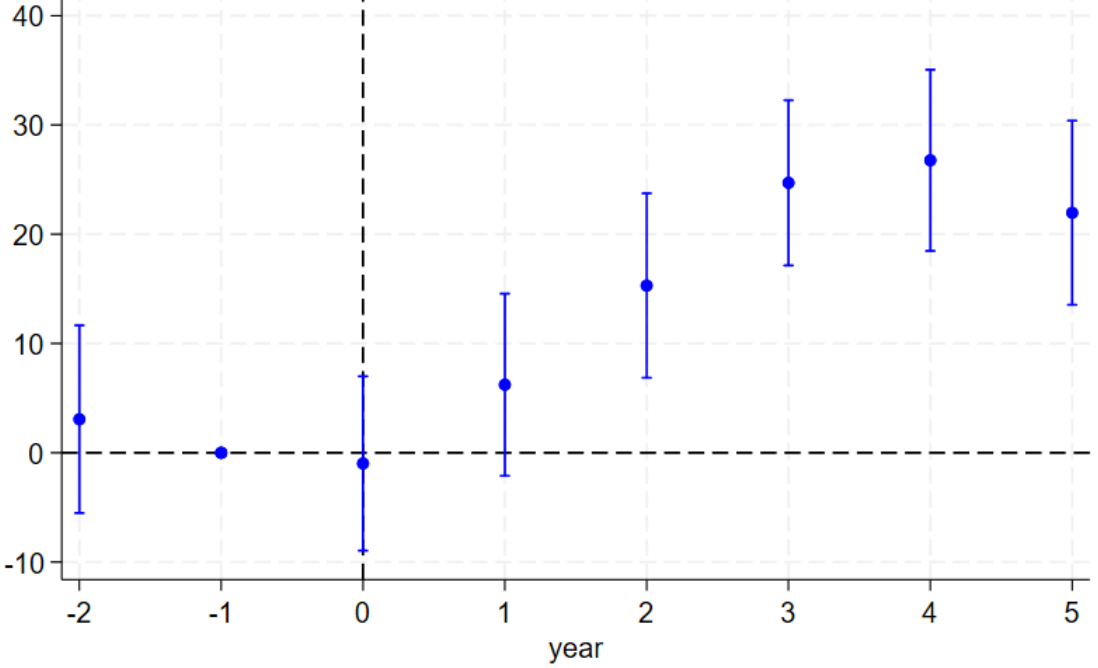
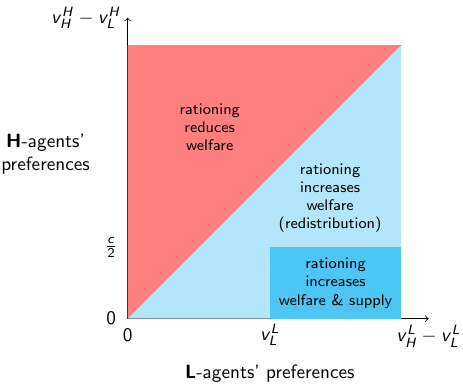
ration excess demand? I characterize in a two-type, two-period model under which preference structures compressing prices increases supply and utilitarian welfare. Intuitively, this is possible when income effects are strong, and participation effects are weak. I confirm the models’ predictions on a large home exchange platform, combining proprietary data on the universe of transactions with several natural experiments. I show empirically that income effects are large and that a reform that reduced the price of attractive homes increased their supply and did not reduce their participation. I confirm that many users have a strong preference against for-money platforms, allowing the exchange platform to set non-market-clearing prices.
Broader insights are that lessons from traditional markets may not easily extend to token economies and that market designs without real money can have advantages even in settings where money is common.
Abstract:
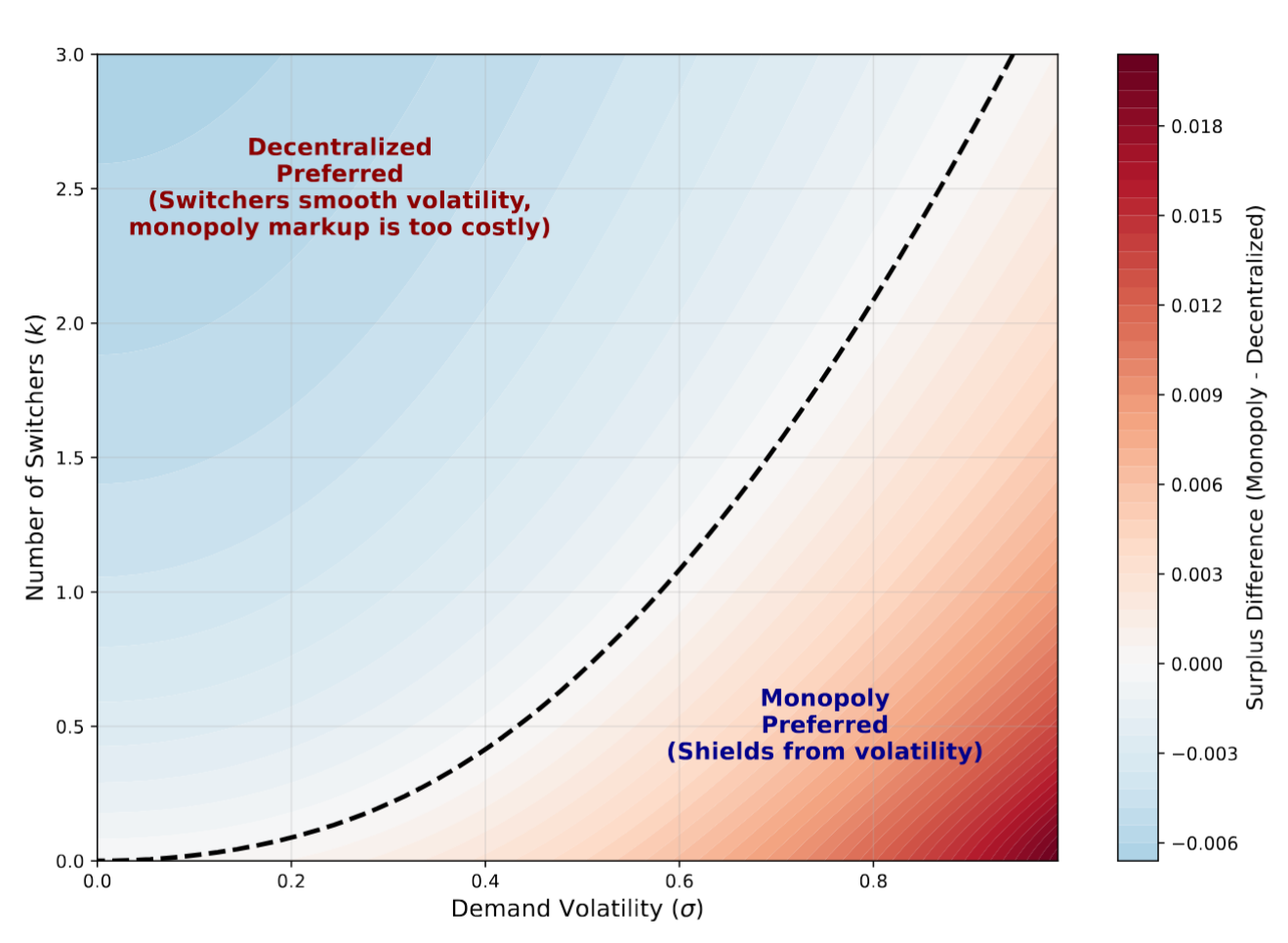
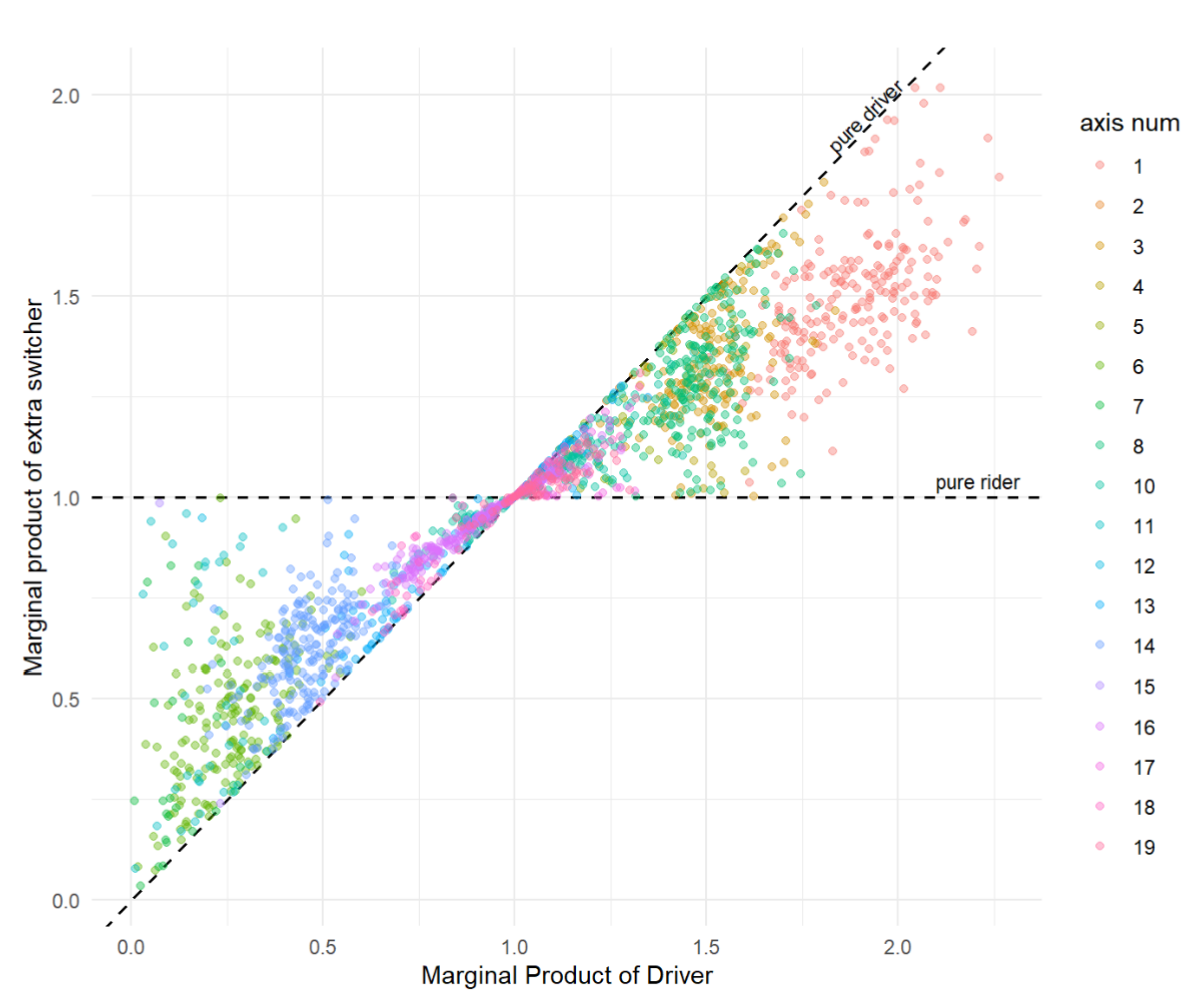
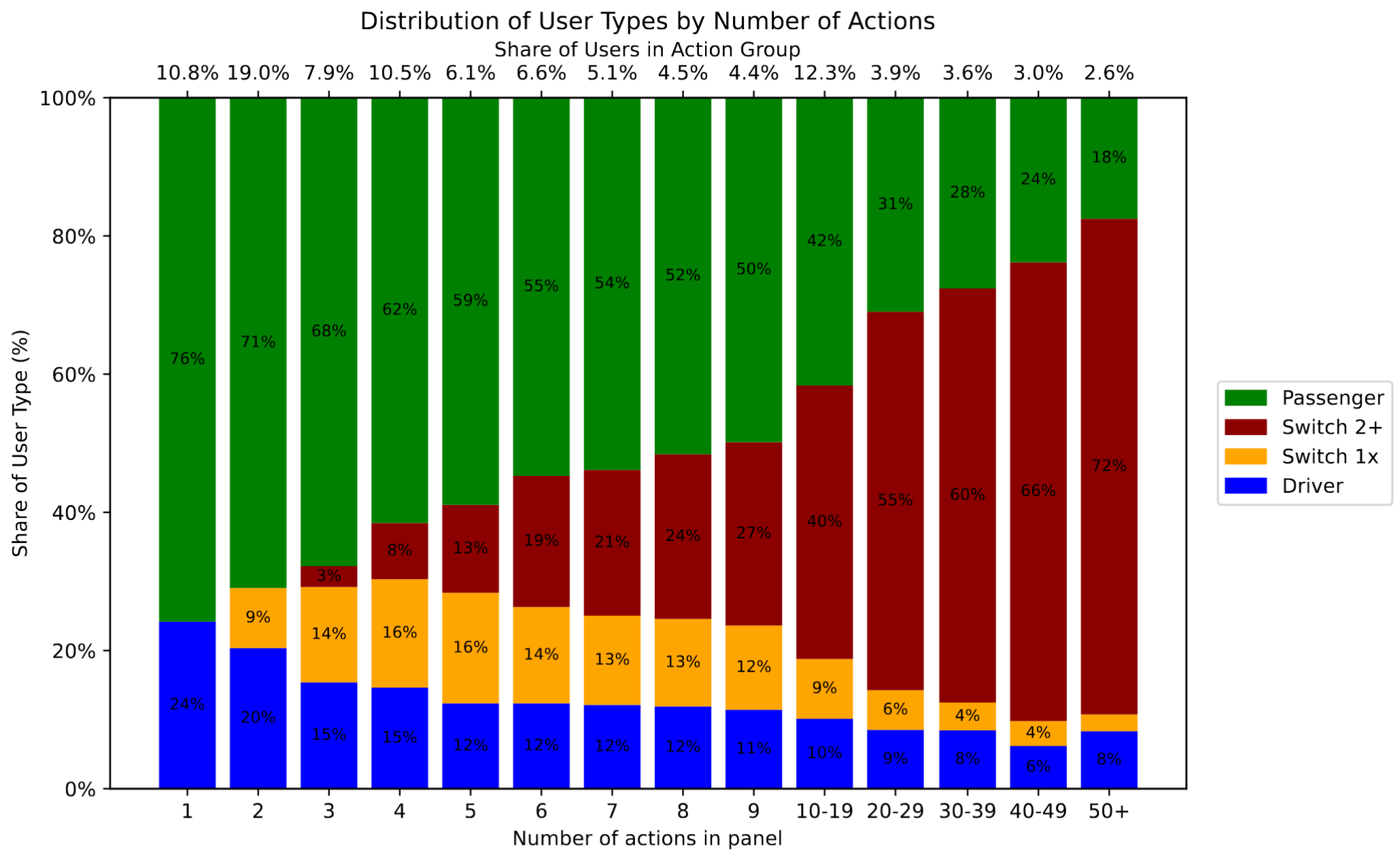
While traditional two-sided market theory assumes that consumers are locked into one side of the market, we argue that in some cases, consumers may switch sides while staying within the same platform. We develop a theoretical model of a two-sided platform with flexible users who can act as either buyers or sellers, depending on market conditions. We show that these "switchers" can reduce matching inefficiencies in decentralized markets, but paradoxically increase the platform's market power when it sets prices, thereby reducing the surplus of pure buyers and sellers. Using proprietary data from a global ride-sharing platform, we document large-scale switching behavior. Empirical estimates of user preferences show substantial variation in the preference to drive or ride, and confirm that users respond to economic incentives when choosing their role. Our results suggest considerable variation across markets in the net welfare effects of switching. These results suggest that user flexibility should be accounted for in both regulatory analysis and platform design.
Work in Progress
"Misplaced trust? Preferences for similarity in an online market", with
Gabrielle Fack and
Liam Wren-Lewis.
Draft available upon request.
Abstract:
This paper analyzes the extent to which individuals prefer to exchange with similar people in a market where trust is important.
Using unique data from a digital platform for holiday accommodation, we find that suppliers prefer to trade with guests who share similar characteristics.
Indeed, when deciding who to trade with, on average, they place more weight on similarity than on guests’ prior ratings.
However, analyzing measures of suppliers' post-exchange satisfaction, we find that similarity matters much less than these prior ratings.
Suppliers therefore appear to make systematic mistakes by prioritizing similarity over measures of past guest behavior.
"Dynamic Matching in a Token Economy: An Empirical Model of Peer-to-Peer Platforms", with
Sam Altmann and
Liam Wren-Lewis.
Abstract:
We develop a structural model of an exchange economy where agents trade indivisible goods (homes) with token-money.
Building on Menzel (2015), we identify preferences assuming a stable matching in a large market.
We estimate the model using transaction and request data from a large platform for exchanging homes.
Observing rejected requests allows us to separately identify preferences of both sides.
We quantify the welfare and equity effects of different pricing schemes, the initial token endowment of new users and of using a currency system instead of facilitating only two-way exchanges.
Papers Accepted to Peer-Reviewed Conferences
"Pricing in Markets without Money" (short version). Abstract in MATCH-UP 2024
Seminars and Conferences
2025
7th Economics of Platforms (ECOP) Workshop (BSE)
Doctoral Workshop on the Economics of Digitization (TSE)
14th European Meeting of the Urban Economics Association, Berlin
Central European University (CEU), Job market seminar
ESCP Business School Paris, Job market seminar
CY Cergy & THEMA, Job market seminar
Copenhagen Business School (CBS), Job market seminar
2024
Applied Economics Lunch Seminar (PSE)
18th North American Meeting of the Urban Economics Association (UEA)
MATCH-UP Oxford
European Association for Research in Industrial Economics (EARIE) conference
ZEW ICT conference (discussant)
Matching Markets and Inequality Workshop (Exeter)
International Industrial Organization Conference (IIOC)
Student Research Breakfast (Columbia)
Micro Theory Colloquium (Columbia)
Industrial Organization Colloquium (Columbia)
2023
European Winter Meeting of the Econometric Society (EWMES)
CIRM Conference 'From matchings to markets. A tale of Mathematics, Economics and Computer Science'
Platforms and the Sharing Economy Workshop 2023
Internal Seminar (PSE)
Public and Labor Seminar (PSE)
Regulation Seminar (PSE)
2022
PSIPSE (PSE)
Grants, Awards and Scholarships
2025
Prize for Best Paper, 8th Doctoral Workshop on the Economics of Digitization (TSE)
2024
Honoroable mention for "Best Student Paper" of the 18th North American Meeting of the Urban Economics Association (UEA)
2024
Selected for the "Rising Star" session of the European Association for Research in Industrial Economics (EARIE)
2024
ANR-funded research grant "Why (not) to use money in the sharing economy" (4,000 EUR)
2024
Selected for the "Rising Star" session of the International Industrial Organization Conference (IIOC)
2023
Doctoral mobility grant by Paris School of Economics
2023
Doctoral mobility grant by the Columbia Alliance to visit Columbia University
2020 - 2023
3-year PhD funding by l'École Doctorale Économie Panthéon-Sorbonne and Paris School of Economics
2018 - 2020
Scholarship by the German Economy Foundation (sdw)
2018 - 2020
Graduate scholarship by the German Academic Exchange Service (DAAD)